Industrial equipment already has a carbon footprint by the time it becomes surplus.
The emissions tied to producing that equipment have already occurred. If a usable asset is scrapped too early, it delivers less productive life from the materials and energy already invested in it.
Reuse keeps that equipment working longer and reduces the need for new manufacturing.
For manufacturers, that makes industrial surplus reuse a practical way to support asset recovery while reducing carbon emissions.
The Carbon in Industrial Equipment Already Exists
Embodied carbon refers to the emissions created before an industrial asset begins operating. It comes from producing the materials, components, and finished equipment that make up the asset.
By the time a machine reaches a facility, its steel has been smelted, copper and other materials have been refined, and its components have been machined, assembled, and transported. Each step uses energy and creates emissions.
Once the equipment exists, those production emissions have already occurred. Scrapping the asset does not remove them.
What Happens When Usable Industrial Surplus Is Scrapped?
Scrapping usable industrial equipment creates two separate carbon effects.
1. The Embodied Carbon in the Existing Asset Is Wasted
When usable equipment is scrapped before the end of its productive life, the emissions tied to producing it have already occurred.
The asset then delivers less useful life from the materials, energy, and manufacturing already invested in it. Recycling can recover some of the underlying materials, but it does not preserve the finished equipment or its remaining productive value.
Premature scrapping therefore reduces the useful return from the carbon already emitted in manufacturing the asset.
2. Replacement Equipment Creates Another Round of Emissions
The carbon impact does not stop with the equipment that was scrapped.
A buyer who still needs that asset may purchase a newly manufactured replacement. Producing it requires another cycle of raw material extraction, processing, manufacturing, assembly, and transportation.
Take an industrial pump as an example. If a usable surplus pump is scrapped instead of resold, another buyer may order a new one. That new pump brings another set of production emissions.
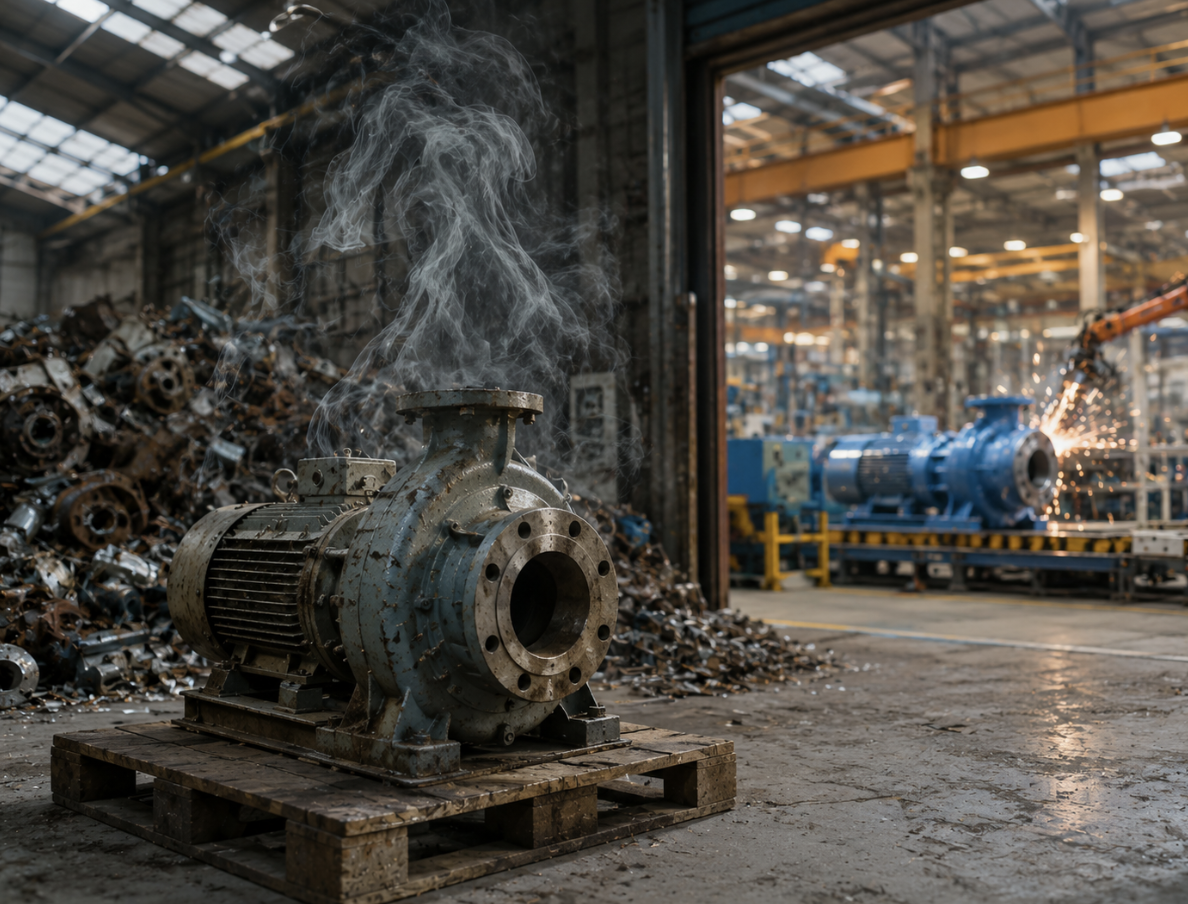
Scrapping usable surplus can therefore end one asset’s productive life early while triggering another manufacturing cycle.
How Reusing Industrial Surplus Reduces Carbon Emissions
Reusing industrial surplus keeps existing equipment in productive use instead of sending it directly to scrap. A surplus asset can be redeployed within the same company or resold to another manufacturer that still needs it.
That continued use reduces demand for newly manufactured equipment and can avoid emissions associated with raw material extraction, metal processing, component production, manufacturing, assembly, and transportation.
Reuse also supports industrial circularity by keeping finished equipment in service for longer. When usable equipment is sent to scrap, some materials may be recovered through recycling, but the finished asset and its remaining productive value are lost. Reuse preserves more of the materials, energy, and production effort already invested in a working asset.
A U.S. Department of Energy analysis estimated that the cradle-to-gate footprint of U.S. machinery products totaled about 78 million metric tons of CO₂e in 2018, with roughly 81% of those embodied emissions arising from upstream supply-chain activities.
Keeping usable machinery in service longer can reduce demand for replacement equipment and the upstream activity required to produce it.
These avoided emissions can also support a manufacturer’s sustainability reporting. Under GHG Protocol guidance, avoided emissions should be reported separately from Scope 1, Scope 2, and Scope 3 inventories rather than deducted from those totals.
Reuse therefore supports decarbonization by extending the productive life of existing equipment and reducing demand for new manufacturing.
How Reuse Supports Financial Recovery and Decarbonization
Surplus reuse can create financial value at the same time it supports carbon reduction.
When managing surplus inventory, reselling an idle asset can convert unused equipment into cash. Internal redeployment can reduce the need to purchase replacement equipment, while moving surplus out of storage helps lower carrying costs and frees space.
The environmental benefit comes from keeping that same asset in productive use. When reuse replaces the need for a new purchase, it avoids another manufacturing cycle.
This overlap means the financial and environmental effects of reuse are often connected. Extending the productive life of existing equipment can preserve economic value while reducing demand for new production.
Conclusion
By the time industrial equipment becomes surplus, the emissions associated with producing it have already occurred. When usable equipment is scrapped before the end of its working life, the materials, energy, and production effort invested in that asset generate less productive value over its life.
Reuse keeps those assets in service longer and can reduce the need for newly manufactured replacements. Across a large surplus portfolio, those avoided emissions can add up.
For manufacturers, the financial and environmental cases are closely connected. Prioritizing reuse over premature scrapping can recover more value from existing assets while reducing emissions tied to replacement manufacturing.
Get the latest insights, trends, and innovations to help position yourself at the forefront of sustainable business leadership—delivered straight to your inbox.
Senior Director Of Revenue
Amplio
Senior Director of Revenue at Amplio, helping manufacturers turn surplus into opportunity through AI-driven growth
Published Oct 5, 2026 9am EDT / 6am PDT / 2pm BST / 3pm CEST