Upcycling a ubiquitous urban waste stream
The Plasticity label was created in 2020 to upcycle discarded plastic umbrellas. The name reflects a uniquely urban plastic waste issue, and the brand launched with a bold declaration: to design a label intended to disappear within ten years, in the hope that the underlying environmental problem would diminish to the point that the brand is no longer needed.
One person’s trash is another’s raw material treasure
Mondo Design Co., Ltd., the founder of Plasticity, develops recycled products that emphasize both design and functionality. The company focuses on creating items that benefit Japan’s environment and communities, while offering users small moments of surprise and joy. Its core brand, Seal, identifies materials destined for landfill and reworks them into new products.
Hina Hasegawa of Mondo Design, describing the company’s origins, states, “Mondo Design, founded in 2006, launched Seal in 2007. Our CEO, Yohei Horiike, was inspired by the idea of creating things from waste materials. We considered many materials, but chose tire tubes because their durability and waterproof properties made them ideal for bags.”
Plasticity emerged from that same philosophy. Hasegawa explains that the team discovered a designer experimenting with umbrella material, transforming it into new textile forms. The idea resonated deeply, leading Mondo Design to explore how such work might be scaled into mass production. Hasegawa said, “Upcycling preserves and reinvents the original material. That approach aligned perfectly with Seal and inspired Plasticity.”
Unique materials, skilled craftsmanship
Plasticity’s bags and accessories differ in style, but they share a common origin: discarded plastic umbrellas. After collection, umbrellas are sorted by material, size, and thickness. Each one is dismantled and cleaned by hand. The metal spokes cannot be reused and are recycled separately.
To create the impression of rain flowing down a windowpane, the cleaned umbrella material is layered and pressed with extreme precision — a technique the brand calls glass rain. The resulting fabric is waterproof, stain-resistant and translucent, with a soft, milky appearance reminiscent of polished glass.
Because each discarded umbrella's parts vary in thickness and quality, every section of fabric must be inspected, cut, and assembled manually. This requires careful stitching and practiced craftsmanship. Although many umbrellas are collected, relatively few finished products can be made. “We want to offer high-quality upcycled products at accessible prices,” Hasegawa notes. “That means relying on skilled craftspeople throughout the production process.”
Steps in the re-use process span multiple regions of Japan:
Across these steps, the emphasis remains on Japanese craftsmanship, minimizing environmental impact, and avoiding animal-derived materials.
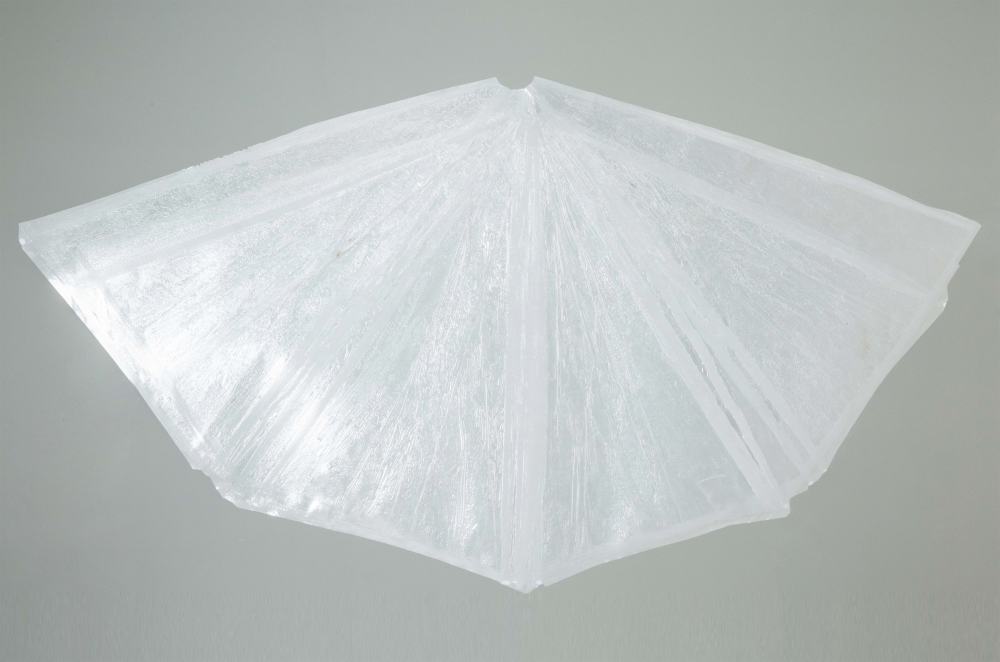 Image credit: Plasticity
Plasticity aims to create quality products that people feel comfortable using and follow production processes that satisfy its artisans. Wherever possible, the label selects production methods with minimal environmental impact and avoids using any animal-derived materials across all processes from fabric manufacture to sewing, while also taking the working conditions of artisans into consideration. The ultimate aim is to incorporate everyone’s ideas and sensibilities and to give forgotten plastic umbrellas a new lease of life as Plasticity products.
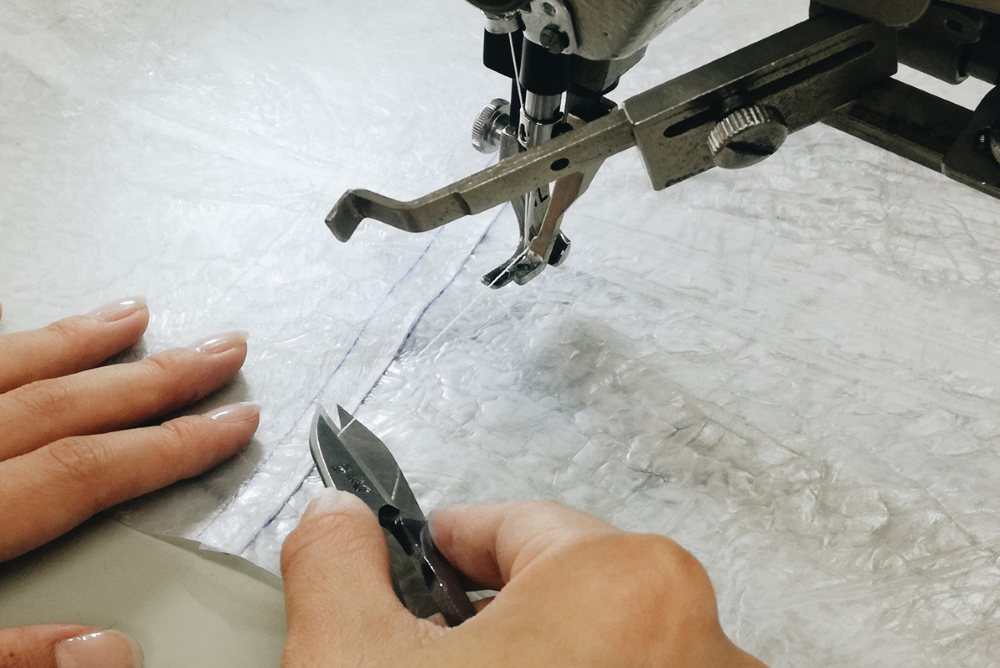 Image credit: PLASTICITY
A brand designed to disappear over time
The company’s larger challenge is ensuring that Plasticity’s success does not inadvertently encourage waste. The brand does not want people to feel comfortable discarding umbrellas simply because Plasticity will upcycle them. “Many umbrellas we receive are almost new,” Hasegawa says. “We appreciate support for our work, but we don’t want people to think it’s acceptable to dispose of umbrellas because Plasticity exists. That goes against our goal of reducing waste in the first place. We want to reduce the number of discarded plastic umbrellas, and we are creating products that use those materials, but we know that is not enough.We need to increase Plasticity visibility and highlight the importance of reducing plastic waste. We want to work with partners to expand this initiative.”
The team hopes to expand awareness, collaborate with partners and contribute to education, including hosting SDG-focused workshops where junior-high students create original goods from dismantled umbrella materials.
Ultimately, Plasticity aspires to a future where plastic umbrellas are no longer discarded in such large numbers — and where its own brand becomes unnecessary.
Plasticity https://plasticity.co.jp/ (in Japanese)
Mondo Design Co., Ltd. https://www.mondodesign.jp/ (in Japanese)
Get the latest insights, trends, and innovations to help position yourself at the forefront of sustainable business leadership—delivered straight to your inbox.
SUSCOM
Published Nov 18, 2025 11am EST / 8am PST / 4pm GMT / 5pm CET