How The Need For A Softer Daifuku Led To The Creation Of A New Texture
“Daifuku are renowned for their chewy, sticky texture, so I would have never imagined anyone would need a ‘soft daifuku,’” Nakamura says.
Yet that need became apparent when his grand uncle, a foodie, died after choking on mochi. While Nakamura knew of similar accidents through the news, having it happen to someone close made him realize that, as a wagashi maker, he needed to think again about mochi.
He tried developing a new mochi using different ingredients to change the taste and texture of daifuku. One day, a supplier sent him a new kind of rice and it clicked: he could use it to create a daifuku that older people could swallow easily. This was the birth of okayu daifuku.
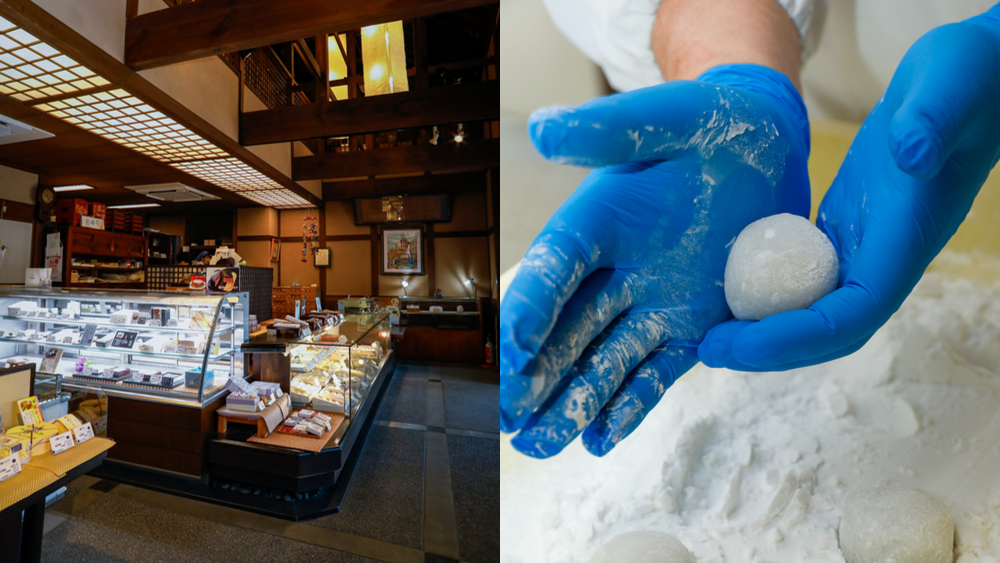 Each okayu daifuku is made by hand. It has all the flavors of rice and brings the same satisfaction as a traditional daifuku
The mochi dough for daifuku is traditionally made with mochigome, or glutinous rice. Nakamura created okayu daifuku using uruchimai—regular Japanese rice—which reduces the dough’s elasticity. While daifuku dough is traditionally steamed, kneading this new dough without heating it up results in a smooth, melt-in-the-mouth texture.
“What makes something easy to swallow? Analyzing this closely, there are a number of other factors besides just softness. Since there are no clear standards, I worked with people engaged in social welfare and nursing care to taste-test and improve my iterations,” Nakamura says.
Along with ensuring okayu daifuku are easy to swallow, he was also demanding about their flavor. Why develop something new if it isn’t more delicious and doesn’t bring even more joy than the original? Such is the devotion of a traditional confectioner operating for over 400 years. Okayu daifuku are indeed so delicious that they are popular not only among people who have difficulty swallowing, but also with their families and staff at care facilities.
The joy of eating something delicious together is another kind of wellbeing brought by okayu daifuku.
The Function Of Sweets In Our Lives
After okayu daifuku launched and word spread, Nakamura soon encountered an unusual customer. Each month, they would order 78 okayu daifuku all the way from an outlying island in Mie Prefecture.
“Curious, I actually went to the island to investigate, and met an elderly couple living alone. The husband was bedridden and struggled to eat even a soft diet. But he was happy to eat okayu daifuku, and had been mostly living on two of them every day. His wife would order 78 daifuku because that’s how many could fit in their freezer.”
That visit reaffirmed the incredible need for okayu daifuku, their potential to change someone’s daily life, and the profound impact sweets can have on people’s lives.
Nakamura had seen the power of sweets before, while distributing wagashi as a volunteer in disaster zones.
“In the aftermath of a disaster, people eat to survive. But once that period is over, people eat sweets to keep on going—they have the power to awaken the drive to rebuild. The experience of seeing that happen repeatedly also guided me toward okayu daifuku.”
Sweets indeed support and satisfy both body and mind, and bring joy to those who eat them. Wagashi makers have continued to play the important role of bringing these confectionaries into people’s lives.
Reaching A New Market With Okayu Daifuku
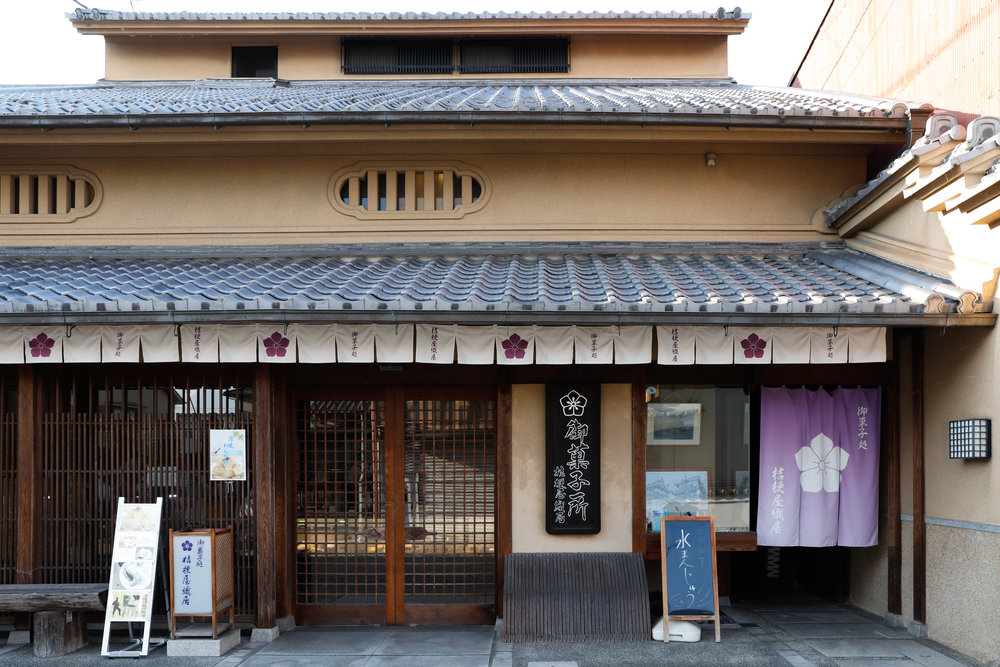 Surrounded by the Yamato, Shigaraki, and Ise mountains, Kikyoya Orii was founded in Iga-Ueno during the Edo period over 400 years ago as an official supplier to the Todo Domain
Okayu daifuku are currently sold at Kikyoya Orii’s physical and online shops, as well as nursing care facilities and events, and tasting events for nutritionists and carers. By actively targeting those involved in nursing care, Nakamura is also aiming to reach a market that wagashi makers are gradually losing.
“For wagashi makers, most customers are in their 50s to 80s. It’s not unusual to hear that someone has entered a care facility or been hospitalized, and over time, we are seeing fewer and fewer of our older customers. But this doesn’t mean that demand for wagashi has disappeared. When I visit care facilities to offer our products, lots of residents are excited to buy them,” Nakamura says.
Right where the market seemed to be disappearing, it turns out a large latent market actually exists. Wagashi makers now need to reach that market to continue fulfilling their long-established role.
“Japanese society will keep growing older. I think wagashi makers around the country really need to think about how they’ll cater to this aging society, and when they do, they should think of okayu daifuku as an option. For example, licensed production of okayu daifuku could help many wagashi makers reconnect with the customers they’ve lost. I’m still working on it, but I’d eventually like to make okayu daifuku into a classic and a standard.”
The challenges facing both Japan’s aging society and its traditional confectionery makers will continue to take shape in the years to come.
Kikyoya Orii
http://kikyouya.shop-pro.jp/
2949 Ueno Higashimachi, Iga City, Mie Prefecture
Get the latest insights, trends, and innovations to help position yourself at the forefront of sustainable business leadership—delivered straight to your inbox.
SUSCOM
Published Oct 28, 2025 8am EDT / 5am PDT / 12pm GMT / 1pm CET