Yamane no Sato in Hanno, Saitama (Japan): Sake Brewing Designed to Protect Biodiversity
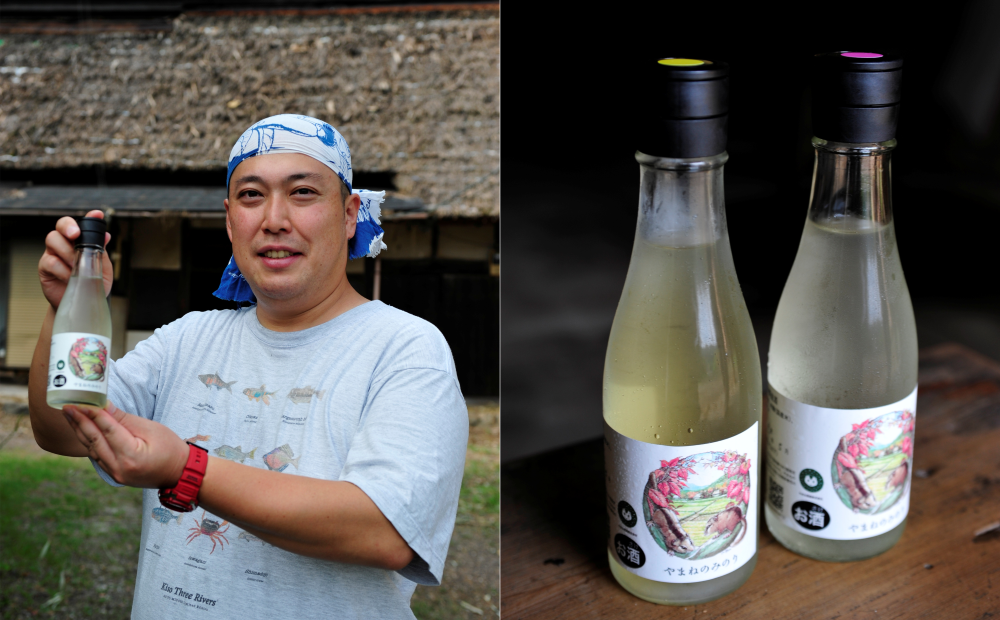 Image credit: Yamane-shuzo inc.
“My grandparents were rice farmers, so I played in the paddy fields as a child. The tadpoles, crayfish, and tadpole shrimps in the paddy water were a familiar part of my everyday life, and later I realized I really loved them and all other living creatures,” Wakabayashi recalls.
“I majored in aquatic ecology at university and then qualified to teach science to junior high and high school students. I was surrounded by living creatures when I was young so, naturally, I wanted to work in a related field.”
Wakabayashi started to sketch his current business in his early 20s.
“My grandfather would drink sake in the evening after a hard day’s work and say to me, “Fukunari, my favorite sake is made from rice like mine.” It was much later at university I learned fermentation is a chemical process driven by microorganisms and I was blown away by the great power of living things. I decided to convey the incredible power of small invisible living organisms through sake brewing.”
Sake brewed in wooden vats: A quintessential Saitama tradition
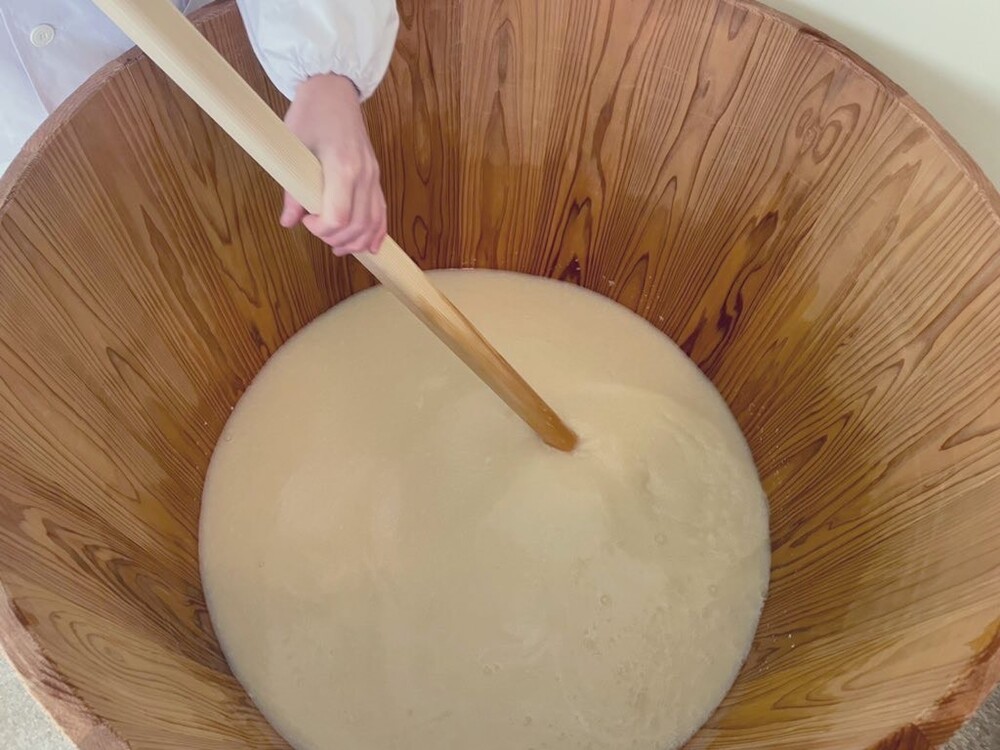 Image credit: Yamane-shuzo inc.
Why does Yamane-shuzo make its sake using rare wooden vats that account for less than 1% of all sake production in Japan?
“Vats harbor countless invisible microorganisms that aid fermentation and lend the sake a deep and complex taste. Many breweries heat sake to ensure stable quality, but we create namazake, sake that is not pasteurized, because we believe it is the microorganisms that brew the sake and humans are there simply to facilitate the process,” explains Wakabayashi. “Namazake contains living yeast fungi, so the taste is constantly changing. That is a thing of pure beauty and we intend to encourage sake brewing that respects nature and living things.”
Fifty percent of the wood used in Yamane-shuzo sake vats is Nishikawa wood produced locally in Hanno. The brewery also uses local rice and water, two essential ingredients, from Saitama Prefecture.
“In 2025, we managed to source pesticide-free rice for 50% of our brewing. Very few farmers in Saitama Prefecture cultivate pesticide-free rice, but we want to encourage farming methods that do not harm the land or the creatures in the soil and our ultimate aim is to switch to pesticide-free rice from Saitama Prefecture for all our production.”
Wakabayashi is determined to achieve his goal, but it is no easy task.
“Capable craftspeople for these particular vats are declining and there is no one in Saitama, so currently wood harvested in Saitama is sent to Shodo Island in Kagawa Prefecture where the vats are made. I want to rekindle those skills in Hanno, so I am encouraging local forestry companies that have operated since the Edo period (1600-1868) to participate in the Wooden Vat-making Revival Project on Shodo Island with me. I want to establish a Yamane-shuzo model for making vats from locally grown wood and using local rice and water to brew sake for local consumption. It is vital to use local resources and pass on traditional techniques, and, above all, respect all living things,” explains Wakabayashi.
Discovering Hanno’s Nature Through A Teacher’s Words
Wakabayashi was inspired to establish Yamane-shuzo in Hanno City by the words of a respected zoologist he met when in high school.
“I met Dr. Masaaki Tomokuni, an authority on stink bugs, on one of my weekly visits to the National Museum of Nature and Science in Ueno, Tokyo. When I mentioned the creatures I loved, he said many of those creatures were present in Hanno. I visited over 50 potential locations nationwide, but those words convinced me to establish the sake brewery in Hanno. Sure enough, many creatures such as Asian black bears, flying squirrels, and Japanese dormice do live there. Arboreal Japanese dormice can only live in healthy forests, and we can only source wood of the required strength for making wooden vats from such healthy forests. The dormouse is living proof of the combined value of forests and sake, so I decided to incorporate the Japanese word for dormouse, yamane, into the brewery name.”
Exporting the Yamane-shuzo model to the World
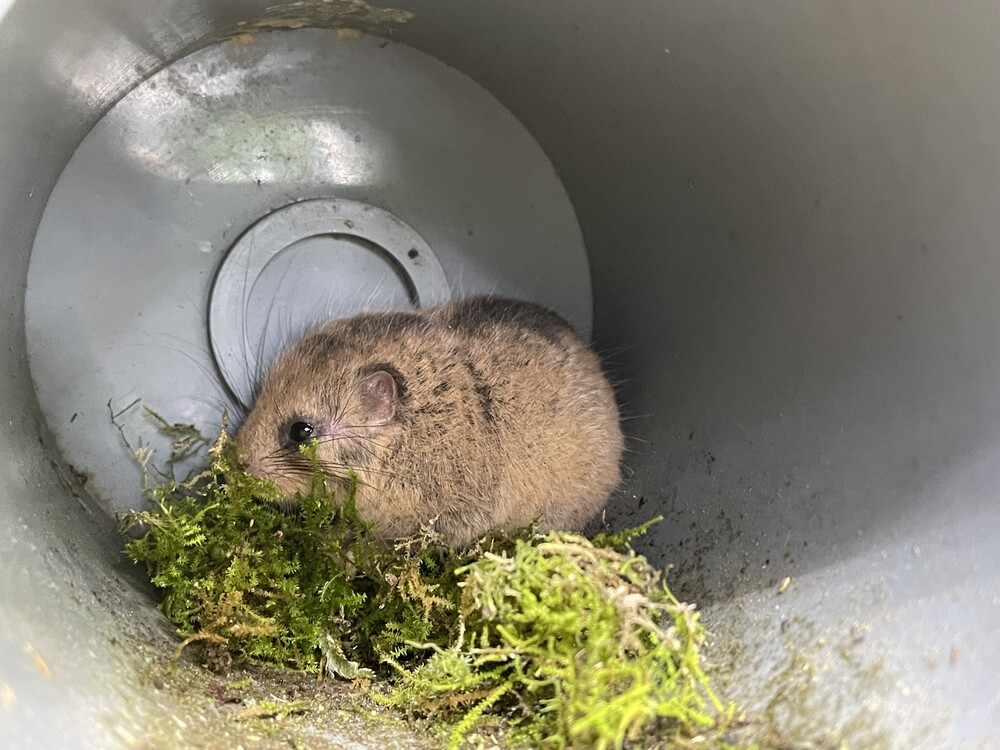 Image credit: Yamane-shuzo inc.
Yamane-shuzo’s environmental conservation efforts extend beyond sake brewing.
“The brewery’s namesake, the Japanese dormouse, symbolizes what we do. We used a portion of the funds generated from sake sales and various events to place roughly 100 nest boxes in Hanno to observe and preserve the dormice. We also recently acquired a thatched house built over 220 years ago and the surrounding Kusumi experimental forest as a showcase for Yamane-shuzo activities. This Yamane no Sato (the home of the Japanese dormouse) area will serve as a stage for future biodiversity conservation activities. We intend to help conserve not only the Japanese dormouse but other endangered species such as Tokyo salamanders, the rare ebine orchid plant, and the harvest mice that live in the hayfields.
The underlying mission of Wakabayashi and Yamane-shuzo’s activities is to convey the importance of nature and living things to future generations, offering nature observation sessions for young people from elementary school to university students, and, ultimately, encouraging an economic cycle driven by broad use of the Yamane-shuzo model.
“Soon, we hope to offer forest therapy sessions and other value-added tours so people can experience the bounty of mountains firsthand and turn the thatched house into a private rental for students or companies to reflect on nature conservation. We are also planning to use overseas rice to brew sake. Nothing would make me happier than to use a portion of sales to conserve local environments, and link Japan's traditional cultural industries with overseas staple rice to help protect living things worldwide.”
Information:
Yamane-shuzo inc.
https://en.yamaneshuzo.jp/
Get the latest insights, trends, and innovations to help position yourself at the forefront of sustainable business leadership—delivered straight to your inbox.
SUSCOM
Published Oct 30, 2025 8am EDT / 5am PDT / 12pm GMT / 1pm CET