For Aquafil CEO, Giulio Bonazzi, the transformation from a nylon manufacturer into a pioneer of circular materials was driven by urgency and vision. Bonazzi realized that, without a shift in strategy, Aquafil would soon be outpaced by changing expectations from brands and consumers. The pressure to change was both economic and environmental.
Aquafil’s journey shows how long-term thinking, engineering skill, and close industry collaboration can turn circularity into a functioning business model. Giulio Bonazzi leads with a hands-on, persistent approach, guiding his team through technical and operational challenges. As more industries move toward circular models, Aquafil offers a proven example of how that transformation can be built and scaled.
Under Bonazzi's leadership, Aquafil developed ECONYL®, a regenerated nylon made from pre- and post-consumer waste such as fishing nets and discarded carpets. Through investment in infrastructure and partnerships across the fashion, automotive, and carpet industries, Aquafil has helped prove that circular business models can scale. In this interview with Sustainable Brands' David Hopkins, Bonazzi reflects on the vision, challenges, and systems that shaped Aquafil’s journey.
Hopkins Aquafil transformed from a traditional nylon manufacturer into a pioneer of circular materials. What was the turning point that inspired this transformation?
Bonazzi: Two people from the textile industry inspired me most: Ray Anderson, founder of Interface, and Doug Tompkins, founder of The North Face. Both were visionary leaders who helped transform their industries. Then came the oil crisis. When prices soared above $100 a barrel, we realized that volatility and scarcity could put us out of business if we didn’t innovate. We didn’t want to introduce new molecules or polymers, as that complicates closed-loop systems. Nylon 6 is unique in that it can be depolymerized—broken down into its original monomer—which, once purified, is identical to that derived from petroleum. This allows us to reproduce it repeatedly without compromise, which most plastics can’t do. That’s why we invested in R&D to develop technology that works with both pre- and post-consumer waste.
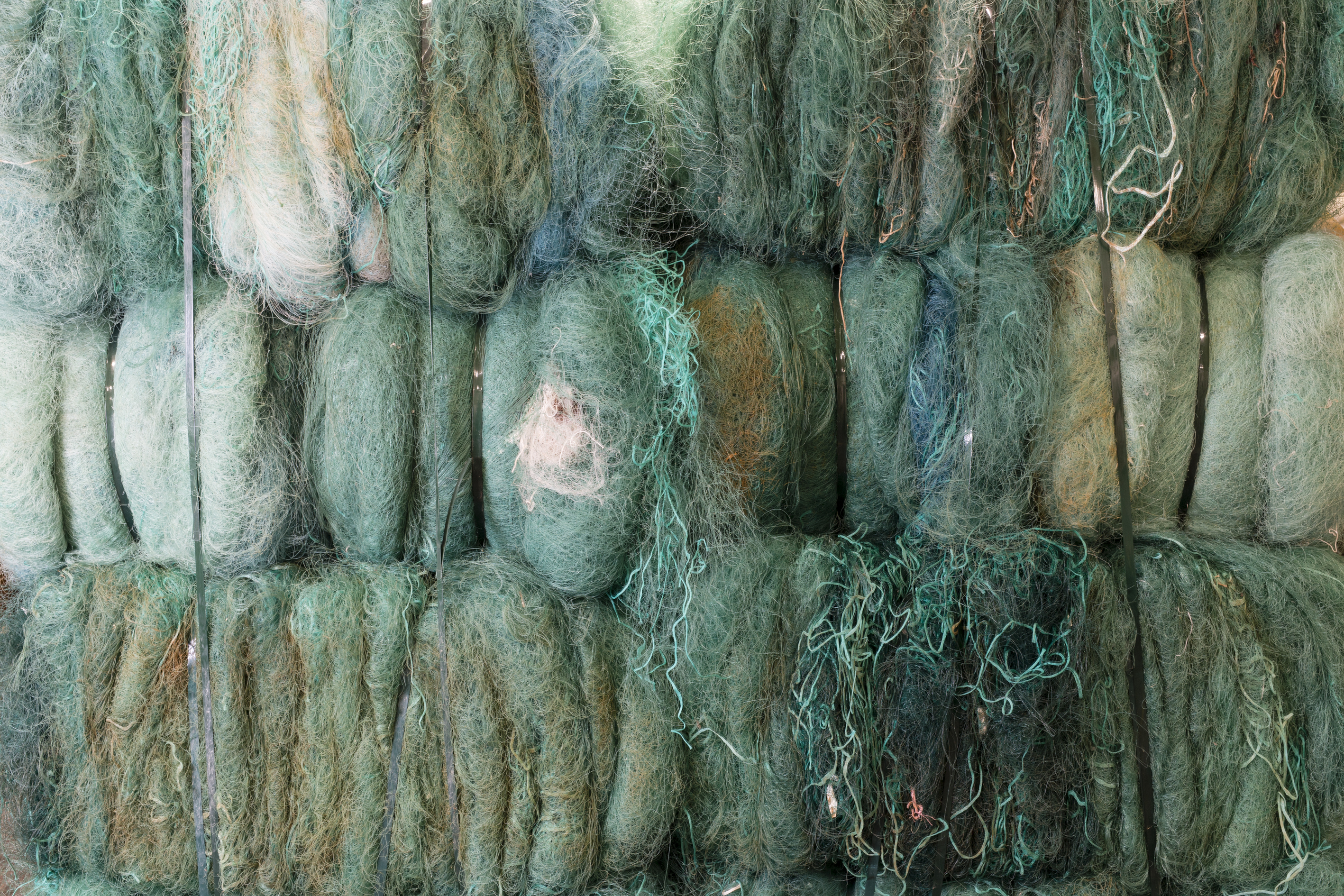 Image credit: Aquafil. Nylon fiber recaptured from waste.
Hopkins: When you first began exploring the idea of circular nylon, what did you see that others in the industry hadn’t yet recognized?
Bonazzi: When we started, sustainability and circularity weren’t the norm. Many people didn’t understand why we invested so much in such an uncertain future. Thankfully, some customers embraced ECONYL® early on. Interface was among the first to use it in modular carpet tiles. We later gained traction in fashion with brands like Prada and Gucci.
Hopkins: How did you communicate this vision internally, especially at a time when circularity was far from mainstream?
Bonazzi: We started by aligning the leadership team. We held a four-day offsite to define what sustainability meant for Aquafil and what transformation would require. Some of my top managers were skeptical; one asked repeatedly, “Are we doing the right thing?” But within months, he became one of our strongest believers. We later created the ECO Pledge, a set of five guiding principles that still serve as our lighthouse, aligning our sustainability strategy across locations.
Hopkins: Can you describe how the ECONYL® Regeneration System works?
Bonazzi: The ECONYL® Regeneration System starts by collecting nylon 6 waste—fishing nets, old carpets, fabric scraps, and industrial plastics. When the waste reaches our plant, depending on the material, it either goes through a shredding process or, if it has coatings or other components, a special washing process to separate those layers from the nylon. For example, aquaculture nets often have antifouling coatings, so we developed our own method to separate them efficiently. The recovered nylon then enters our chemical depolymerization system, where steam, energy, and a small catalyst break it down into basic monomers within hours. These monomers turn into vapor, which we condense and purify through a series of distillation columns. The result is a highly pure nylon monomer—caprolactam—the same quality needed to create brand-new, premium nylon fiber.
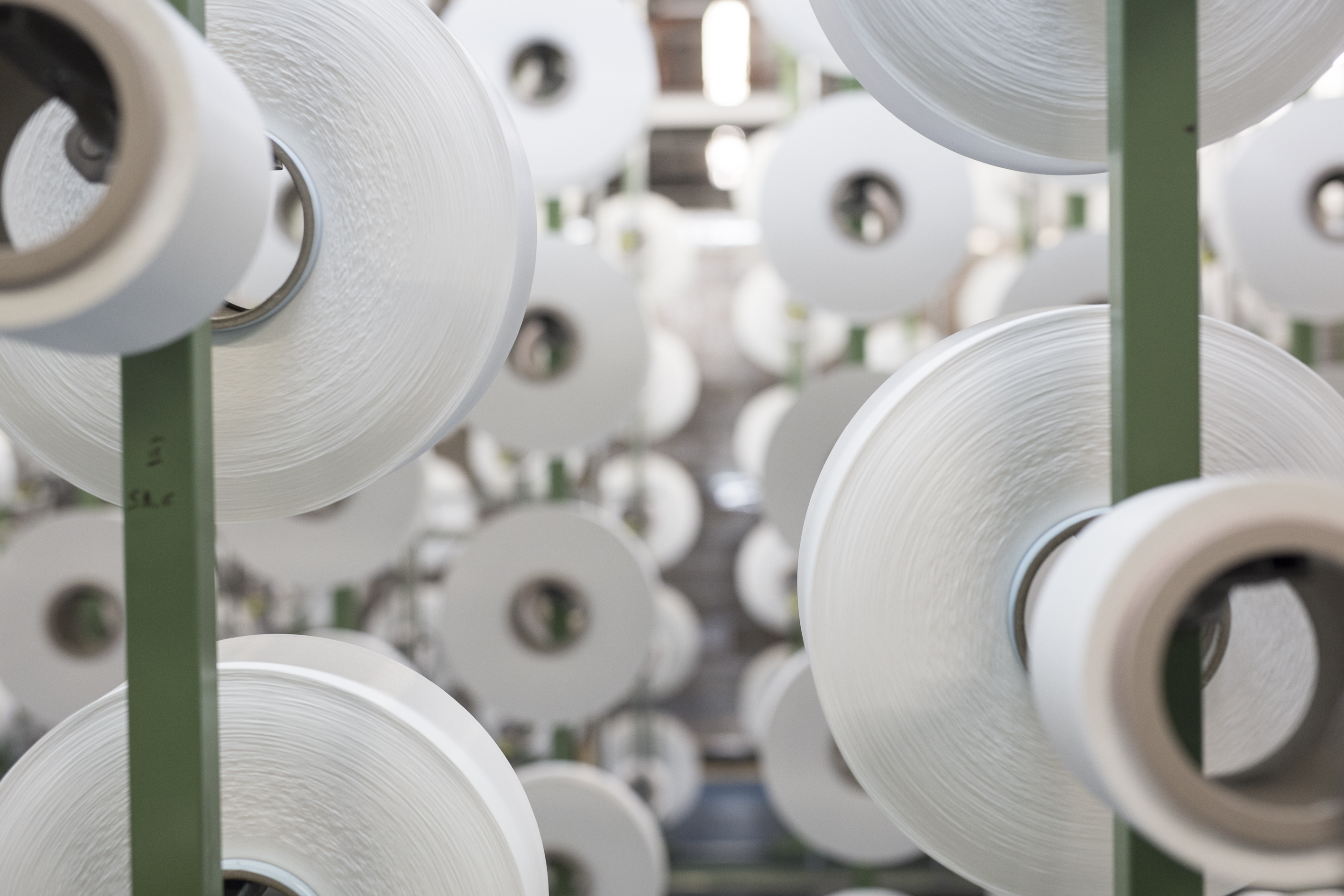 Image credit: Aquafil. ECONYL® yarn.
Hopkins: What were some of the biggest operational or logistical challenges in collecting and processing waste for the regeneration system?
Bonazzi: Our first challenge was sourcing enough nylon waste. We assumed it would come to us naturally, but it didn’t, so we built our own reverse-logistics network from scratch. Scale was another hurdle. We run large industrial plants, but the waste comes from many small sources globally. We had to start with waste types that could be collected cost-effectively or in regions with extended producer responsibility programs, where the legal framework supports recycling. Over time, we’ve learned a lot. We’re not a waste-management company, but to make circularity work, we’ve had to think like one. It’s been a steep learning curve, but essential to building the ECONYL® Regeneration System.
Hopkins: Many companies talk about recycling, but few have built the infrastructure to go fully circular. What makes Aquafil’s model different?
Bonazzi: Recycling sounds simple, but in reality, it’s incredibly complex. It’s not just about collecting waste; it requires building an entire system that allows materials to be used over multiple life cycles. You need the right partners, logistics, technology, and processes all working together. At Aquafil, we’ve spent years developing this infrastructure ourselves. That’s what sets our model apart. We didn’t just talk about recycling—we built it to scale. The best part for customers is that their process stays the same. They simply replace conventional nylon with ECONYL® yarn. Behind the scenes, it’s complex. For our partners, it feels seamless. That’s when circularity truly works.
Hopkins: What were some of the hardest systems or processes to reinvent on the path to circularity?
Bonazzi: Technologically, we had to invent everything. There were no off-the-shelf solutions, so we built our own systems or adapted tools from industries like paper recycling and food processing. We also had to challenge assumptions about recycled materials. Early on, many customers saw “recycled” as a downgrade. It took years of testing and collaboration to prove that ECONYL® nylon could match the quality of virgin materials. Our first success in textiles came only after nearly four years of development. Now we’re applying that same innovation to new areas, like recovering fishing nets in developing regions such as Ghana, India, Pakistan, and Thailand. It’s easier with fish farms, but with small-scale fishermen, we’ve had to build collection and transport systems from scratch. Looking ahead, new textile legislation in Europe will require separate collections starting in 2025. We’re already working with collection centers to sort and recover nylon efficiently. Every step brings us closer to a circular model, but it remains a constant process of reinvention.
Hopkins: What have you learned about the importance of designing for circularity from the beginning, rather than trying to retrofit sustainability into existing systems?
Bonazzi: Designing for circularity from the start makes all the difference. Take carpets, for example. Traditional ones can be recycled, but without smart design, demand, or supportive legislation, it becomes too expensive at scale. In Europe, we’ve worked with customers to redesign carpets using the same manufacturing equipment, making small but meaningful changes that make them easier and more cost-effective to recycle. These next-generation carpets are already being used in cruise ships and airplanes, where flooring is replaced every few years. Now, instead of going to landfill, they can be returned to us and recycled into new material. When circularity is embedded at the design stage, waste becomes a resource. For instance, producing car mats creates up to 25% pre-consumer waste during cutting and fitting, just like with swimwear. But that material is still high-quality nylon. If properly sorted, we can take it back and recycle it. It benefits everyone. Manufacturers reduce disposal costs, and we keep valuable material in use. That’s the power of designing for circularity from the beginning. When products are built to be recycled, sustainability becomes part of how the business operates, not just an added expense.
Hopkins: Were there moments when progress stalled or when you questioned whether the vision was achievable? How did you move past them?
Bonazzi: We made mistakes, especially when introducing technologies we believed would scale industrially but didn’t. Step by step, we fixed them. Fortunately, I have a strong team—engineers, chemists, mathematicians, and physicists—who are skilled and motivated. They’ve been essential to our progress. Recycling can be done alone, but circularity requires involving the entire value chain. It’s a completely different model.
Hopkins: Circularity doesn’t happen in isolation. How have collaborations across industries, like fashion, flooring, and automotive, helped scale the impact of ECONYL®?
Bonazzi: Aquafil is an ingredient manufacturer, so without collaboration with our customers, circularity would be impossible. We can make beautiful yarns, but others must turn them into fabrics, garments, furniture, or carpets. We work closely with customers to help them source materials and design product constructions that support circularity. The goal is to make products that can be easily disassembled and recycled at the end of their life. That’s how real circularity happens—through shared commitment across the value chain.
Hopkins: What have you learned about the kind of partnerships that make circularity successful at scale?
Bonazzi: Successful circularity partnerships are built on trust and openness. They rely on real exchanges of knowledge, not just transactions. The best results come when both sides share insights to find better solutions. Circularity requires transparency across the entire value chain—from raw materials to design, production, and end-of-life recovery. With mutual trust, you can experiment, take risks, and innovate more quickly. That’s how we’ve built long-term relationships with partners who are more than customers—they’re true collaborators. Circularity works when we move forward together.
Hopkins: What advice would you give to other leaders looking to shift their organizations from linear to circular models?
Bonazzi: Start by studying your industry closely and understanding what is truly sustainable. Examine the health and environmental impact of your materials. That is what we did with nylon 6, evaluating both its safety and potential for circularity. Then move step by step. Hire the right people, build strong partnerships, and develop solutions that are technically and economically viable. Be patient, it will not pay off overnight. And be realistic about the market. Do not assume customers will pay more just because a product is sustainable. The goal is to make circularity competitive by designing systems that make the right choice the easy one.
Hopkins: As you think about the next decade, what innovations or partnerships excite you most in advancing the circular economy?
Bonazzi: Many things excite me, but especially the opportunity to not only scale circularity but also decarbonize nylon 6 manufacturing. We’re focusing heavily on the energy side of the process by using renewable sources and improving efficiency. This allows us to reduce raw material use, preserve resources for future generations, and lower the carbon footprint of production.
Hopkins: And our last question, circular transformation takes courage and persistence. What has kept you personally motivated through this journey?
Bonazzi: From the beginning, it was a matter of do it or die. The world was changing, and we had to change with it or be left behind. That belief gave me the courage to start. But what’s kept me going is simpler: it’s the right thing to do. Building a circular model isn’t easy, but once you see the impact, less waste, lower emissions, smarter use of resources, you know it’s worth it. My team and our customers keep me motivated every day. Their energy, creativity, and belief in what we’re building together make this more than a business, it’s a shared mission.
This interview was co-produced by David Hopkins and Imari Perez.
Get the latest insights, trends, and innovations to help position yourself at the forefront of sustainable business leadership—delivered straight to your inbox.
Director, Business Development
David is a business development and sales professional committed to sustainability, social and environmental innovation.
Published Dec 10, 2025 6am EST / 3am PST / 11am GMT / 12pm CET