Roughly one in four people around the world still cannot count on safe water at home. For the other three in four, it can be difficult to fully understand what that means in someone’s daily life.
We often hear and share important numbers: people reached, liters replenished, systems installed, dollars invested. Those numbers matter. But after more than two decades working in social impact, I have learned that the most important results are usually the hardest to count. They do not live in a spreadsheet. They live in someone’s day.
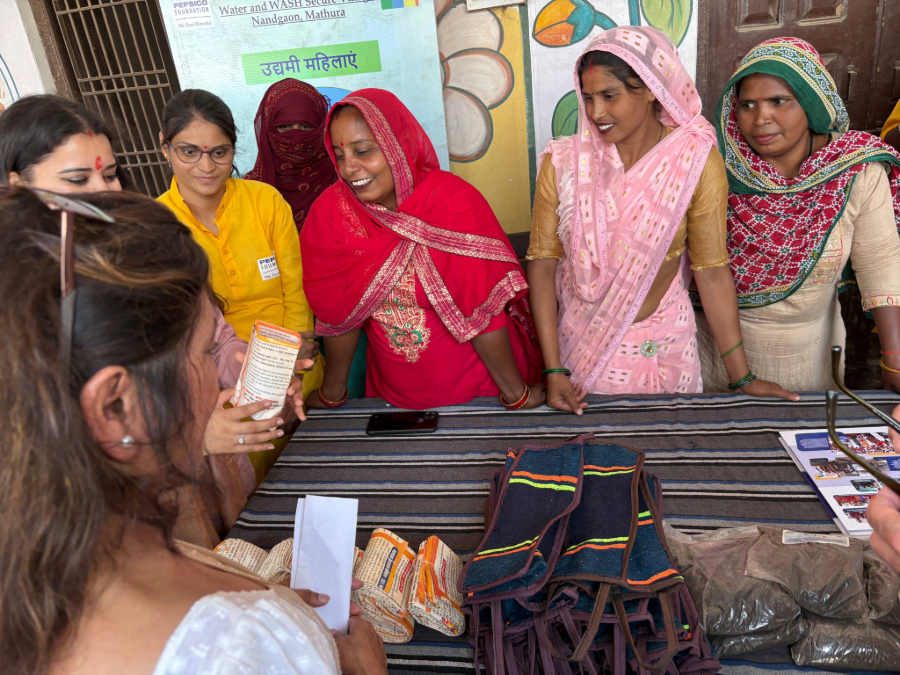
I saw what this looks like near PepsiCo’s manufacturing facility in Kosi, India. Women in neighboring communities had spent hours every week collecting water for their families. After a rainwater harvesting structure was installed, that burden eased. When I had the privilege of visiting several years later, those same women were making and selling handmade crafts. They were using the time they once spent collecting water to become entrepreneurs, earn an income and create new possibilities for themselves, their families and their community.
The same shift was unfolding in a classroom nearby. At the local school, the lack of safe drinking water and sanitation created a significant barrier to regular attendance for many children, particularly girls. But installing infrastructure, including rainwater collection, filtration, hand-washing stations and toilets, was only the start. The students became leaders, maintaining the equipment, demonstrating stewardship and teaching hygiene practices to others. Since 2022, the program has trained 1,400 people, scaled across six villages, impacted 76,000 in the community and helped to conserve 28 million gallons of water.
These community members are not just beneficiaries. They are the leaders, operators, teachers, entrepreneurs and stewards who help make the life-changing impact of safe water sustainable.
Behind the numbers
Daily realities like these sit behind the numbers. Since 2010, PepsiCo and the PepsiCo Foundation have helped approximately 97 million people gain access to safe water, moving us closer to our goal of 100 million by 2030. I am proud of that progress, but access is just the beginning.
Through this work, three lessons have stayed with me:
- Look beyond the infrastructure to what it makes possible. A rainwater harvesting system, filtration station or school toilet may be the most visible result of an investment, but it is not the whole story. The impact beyond the tap shows up in hours returned to families, children able to attend school, stronger livelihoods and communities with greater control over their futures.
- Stay close and build for the long term. The value of an investment is not determined on the day it is completed. It is determined by whether it still works and still serves people years later. Lasting impact depends on colleagues who know the local context, capable community partners and relationships that continue long after installation. I have seen this focus across our PepsiCo India team, from colleagues in Delhi to employees living and working around Kosi. They work alongside local partners and communities not as distant donors, but as neighbors invested in helping the region thrive. No single organization can see everything on its own. That is exactly why proximity matters, and why we look to local colleagues and trusted partners to build alongside communities rather than for them.
- Invest in capabilities, not only capital. Funding can help build infrastructure, but lasting impact also requires pairing global expertise with local knowledge and community leadership. For instance, experts can help build understanding and protect local watersheds while communities are equipped to operate and maintain new systems. In Egypt, I have seen PepsiCo agronomists work alongside smallholder farmers, sharing irrigation and water stewardship practices that have helped farmers produce healthier, deeper-rooted crops, improve yields and increase incomes. Over three years, moving to improved irrigation methods saved more than 1.2 billion liters of water. Farmers adopting improved irrigation also saw an average 18% increase in crop yields and a 30% decrease in irrigation costs.
These lessons are especially important for companies connected to the food system. Water grows the crops we source, supports the communities where we operate and sustains the ecosystems we all depend on. None of this can be addressed alone. Lasting change requires us to think in generations, not projects, and to build in a way that communities, ecosystems and businesses can all carry forward together.
Our work to expand safe water access is part of a wider approach to water stewardship. By the end of 2025, PepsiCo had achieved 100% water replenishment at company-owned manufacturing facilities located in high-risk watersheds. These efforts are connected because they often support the same watershed. Replenishment helps restore the local water resources on which communities and businesses rely, while safe water programs help turn that shared resource into reliable access for people. Investing in both aims to create a reinforcing cycle that strengthens water security for communities while helping build the resilience of the places where businesses operate, source ingredients and employ people.
Reaching 100 million people will be a milestone worth celebrating. But numbers, infrastructure and investments tell only part of the story. We should look beyond what was installed to what people and communities can do because of it. We should invest in the capabilities and local leadership needed to sustain impact. And most importantly, we should stay connected and engaged for the long term.
After more than two decades in this work, what stays with me is not the infrastructure installed. It is the lives changed. That is what matters most.
Get the latest insights, trends, and innovations to help position yourself at the forefront of sustainable business leadership—delivered straight to your inbox.
Senior Director of Social Impact
PepsiCo
Published Oct 21, 2026 9am EDT / 6am PDT / 2pm BST / 3pm CEST