There is science supporting the environmental principles of regenerative
farming
– keeping living roots to build soil organic matter, enhance water infiltration,
and sequester carbon; fostering biodiversity to create a system that can better
sustain itself in times of adversity; integrating
animals
as walking composters to enhance biology and fertility; etc. But the truth is,
regenerative practices are not going to make a positive dent in the food system
long term unless there is a true economic case for farmers and others in the
value chain. And there is.
Here's a (very) simplistic example to frame the logic:
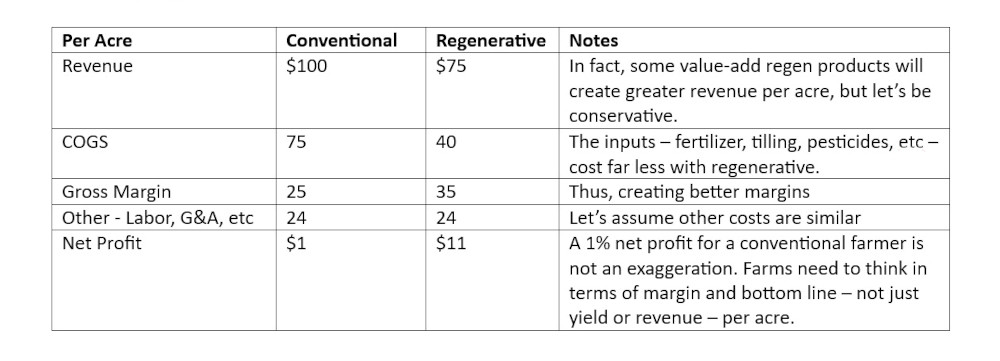
This is the lower-cost economic case. There is another side of the economic
case — which involves creating more value-added, higher-margin,
less-commoditized products that will, in fact, yield greater revenues per acre
(and also increase the ‘Other’ costs such as processing, packaging, etc vs just
raw commodity versions of a crop or animal). We’ll talk about the value-added
case down the road.
One challenge many conventional farms face is one-time conversion costs and
investments — i.e. all the infrastructure they’ve built and the way they’ve
managed their farm was built for a conventional business model. This can’t be
ignored. There is significant federal funding and private grants available to
facilitate some of those costs; but regardless, conventional farming today is a
very low (if any)-margin, price-taker business model vs. trying to build a
better-margin, price-maker economic model.
Don’t take my word for it
In addition to the growing number of brands that are
cultivating regenerative supply
chains,
there are real-world case studies that actualize the above logic:
Paul Shoemaker is ED at Carnation Farms — a community-based hub for regenerative food and agriculture that educates and empowers the work of culinary & food and farming professionals.
Published Sep 16, 2024 8am EDT / 5am PDT / 1pm BST / 2pm CEST