In New Zealand, nature assets are the productive foundation of farming, our business and our economy. Our pastoral landscapes are rich in unique biodiversity – but with quickly changing climate conditions and growing pressure on natural resources, we can no longer take them for granted.
At Silver Fern Farms, we’re driven by our purpose - “creating goodness from the farms the world needs” - and have placed the creation of enduring value – tāria te wā in Māori – front and center of our market-led strategy. We believe the next wave of value creation in food will come from nature-positive farming. That means not just producing protein but mobilizing our 16,000 farmers across the country to protect, manage, and enhance the natural systems that underpin agriculture.
Our ambition is to be recognized globally as a trusted nature-positive producer – growing farmer and food system resilience. Here’s how we’re working to make that real and the lessons we’re learning along the way.
 Silver Fern Farms
Lesson 1: Nature is an undervalued asset – and a catalyst for trust
As I often say, “you may think we sell red meat, but we actually sell trust”. Trust is earned through visibility and proof of action. That idea reflects the position our brand is taking on nature.
For too long, natural assets like water, soil, carbon and air have been treated as free – invisible on balance sheets and vulnerable to depletion. By recognizing their economic value, we can protect them and deepen trust in our farmers and our production systems.
By paying farmers for stewardship of ecosystem services, we’re helping shift mindsets from the idea that nature is free to treating it as a finite, valuable, productive asset.
In 2022, we launched our Net Carbon Zero by NatureTM range, where 100% of the emissions are inset by trees and native forest growing on our suppliers' farms. Available on supermarket shelves and online in the USA and New Zealand, we leverage New Zealand’s extensive, grass-fed, farming systems to ensure that the emissions associated with every kilogram of product sold have been accounted for by vegetation on the farms where the animals are raised.
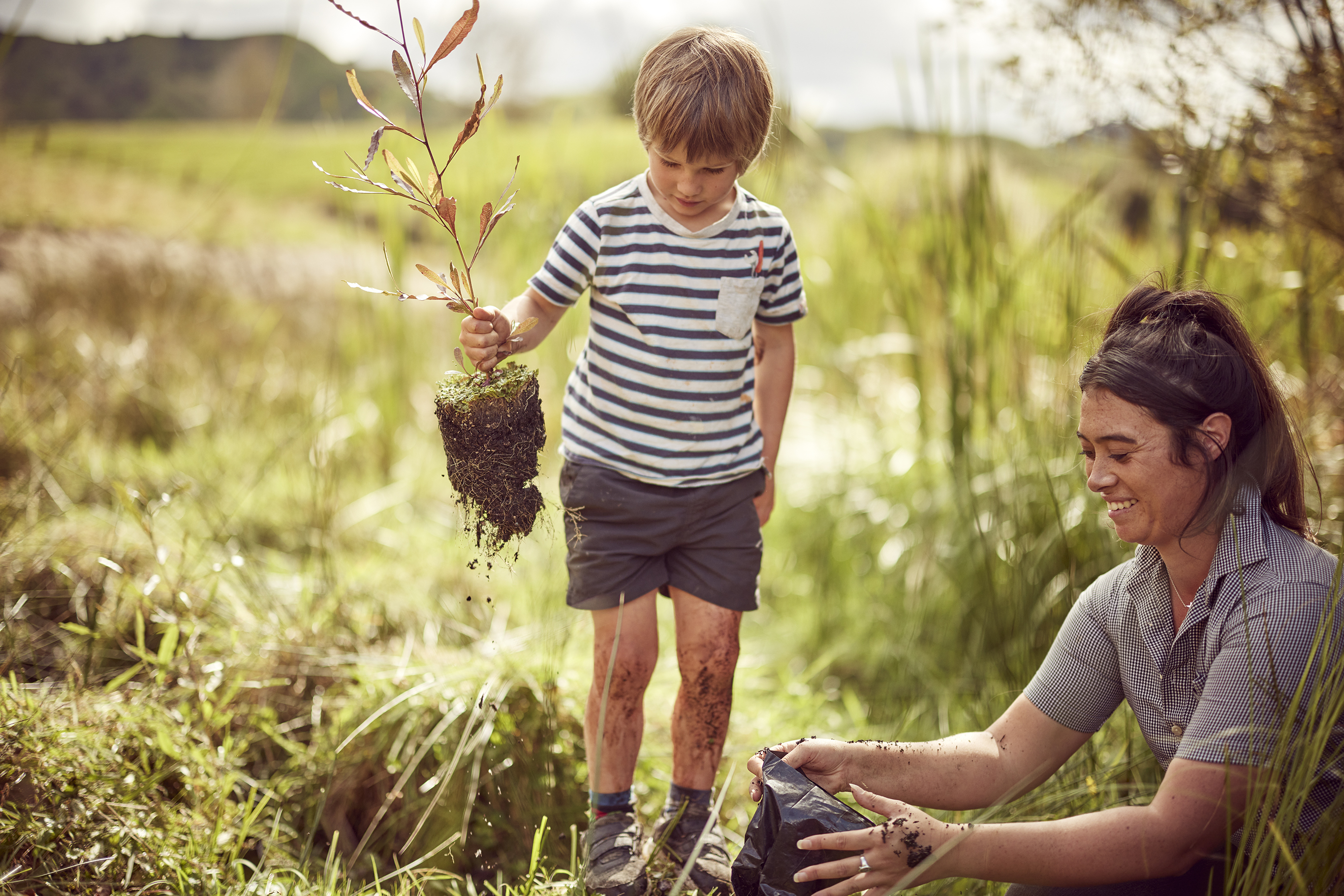
Farmers are paid for their role in looking after these trees and native bush, and use the payments to reinvest in nature positive activities on their land, such as expanding native bush and riparian planting, restoring wetlands and waterways, and improving soil health. These efforts can result in more carbon capture, enriched biodiversity, improved water quality, and ultimately more resilient farming systems. It creates a flywheel of positive impact that strengthens both the environment and farm income.
Watch our Net Carbon Zero by Nature™ farmers share their passion for nature and their role in this brand.
Lesson 2: Nature stewardship builds business value
Sustainable and regenerative farming practices can lift returns while protecting natural assets. We’ve supported over 700 farmers through New Zealand’s leading Farm Assurance Programme, NZFAP Plus. It encourages continuous improvement in sustainable practices and enhances natural capital by emphasising the importance of managing water, soil, and biodiversity. This enables Silver Fern Farms to meet the standards of our global customers, access premium markets, build credibility, and earn higher prices - turning stewardship into a direct commercial advantage.
Market access increasingly depends on proving environmental credentials – and we’re turning that pressure into an opportunity with global deforestation requirements like the European Union’s Deforestation Regulation (EUDR). Working with PRISM Earth, we combine high-resolution satellite imagery with individual animal traceability to deliver a world-leading approach that proves our beef supply chain is deforestation-free. This system strengthens trust, safeguards market access, and positions Silver Fern Farms as a leader in sustainable production.
Lesson 3: Finance and governance embed accountability
It’s important to value impacts in our own operations, not just upstream on farms. In 2022, we secured a syndicated $320m NZD sustainability-linked loan, one of the largest of its kind in New Zealand, designed to align financial incentives to tangible environmental outcomes. While our first facility focused on waste, water, and emissions reductions as well as farmer uptake of NZFAP Plus, our second facility broadens the scope to include biodiversity milestones.
This innovative financing has influenced deep internal change in our business – as reflected in our progress – it reinforces our commitment to embed sustainability into our business model, reward measurable progress and accelerate the transition to a nature-positive food system by demonstrating how governance and capital can drive real-world environmental impact.
Looking ahead – our early returns and future potential
Our programs are already driving revenue through premium pricing, access to new markets, and stronger brand differentiation. By making nature core to our strategy, we support farmers in creating tangible assets that enhance prosperity, resilience, and competitive advantage. We’re still in the early stages but the pattern is clear: when nature is valued, farmers capture returns. This points to a larger shift in how food systems can work. We're backing New Zealand farmers to lead the world in nature-positive production - and proving that leadership builds resilience across the entire food system. When nature is valued, farmers prosper, supply chains strengthen, and long-term food security improves for everyone.
Our Climate Ambitions
Silver Fern Farms has set ambitious science-based targets validated by SBTi to reduce our climate footprint: 42.7% reduction in Scope 1 and 2 emissions by 2030, and significant reductions across Scope 3 emissions – including beef emissions intensity 16% - by 2032 (from a 2021 baseline).
Our Sustainability Action Plan – Good by Nature
Our efforts align to our Sustainability Action Plan. The plan identifies eight material issues for the business – including climate innovation, enhancing nature, circular future, trust and connection, community and belonging, people and wellbeing, disruptive innovation and Te Ao Māori.
Contact email - [email protected]
Get the latest insights, trends, and innovations to help position yourself at the forefront of sustainable business leadership—delivered straight to your inbox.
Published Oct 14, 2025 12pm EDT / 9am PDT / 5pm BST / 6pm CEST