If David Attenborough’s new Ocean movie isn’t
already keeping us up at night, an alarming new
study highlights another
sign our seas are in crisis: Ocean
acidification
has already breached its planetary
boundary
— a threshold not meant to be crossed if we are to keep Earth’s systems in
balance. The study by Plymouth Marine Laboratory, NOAA and Oregon
State University found that by around 2020, seawater calcium carbonate levels
had fallen more than 20 percent below pre‑industrial norms — meaning, our seas
can no longer ensure long-term survival of marine life.
The implications are alarming. As carbon dioxide dissolves in seawater, pH drops
— and with it, the structural integrity of countless calcifying organisms:
corals, oysters, mussels, even microscopic sea butterflies. At depths of around
200m, roughly 60 percent of the ocean has already exceeded safe acidification
levels, threatening deep‑sea biodiversity on an unprecedented scale.
Scientists warn this isn’t just an ecological crisis; it’s a socioeconomic one —
especially for coastal communities depending on fisheries, reefs and ecosystem
services. They’re urging global CO₂ cuts and immediate, place‑based
conservation
strategies
to prevent irreversible marine damage.
In this critical moment, we spotlight five cutting‑edge technologies, ideas and
solutions aimed at improving the state of our oceans.
Using harmful algae to prevent harmful algae
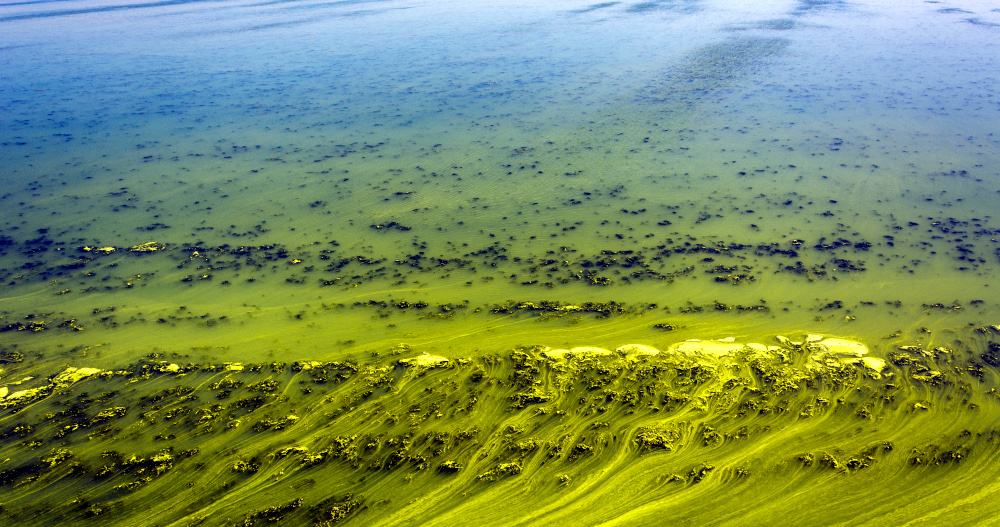 Image credit:
evening_tao
Image credit:
evening_tao
Researchers at Florida Atlantic University
have cleverly developed a surprising way to fight water pollution: by using the
problem to attack the cause. Specifically, they’ve created an adsorbent
material
made from blue-green algae (cyanobacteria) that can pull phosphorus — the very
nutrient that fuels algal overgrowth — out of polluted water.
How does it work?
The researchers collected cyanobacterial biomass from harmful algal
blooms,
then applied microwave heating and treated the biomass with lanthanum chloride
or zinc chloride to enhance its ability to bind with phosphorus. The resulting
material acts like a molecular magnet — removing up to 90 percent of phosphorus
from contaminated water in just 30 minutes, using as little as 0.2 grams per
liter. This not only neutralizes the phosphorus that feeds future blooms — it
also transforms invasive algae into a functional, low-cost cleanup tool.
Why should climate-conscious companies care?
Algal blooms are a global environmental threat, fueled largely by agricultural
runoff. They choke waterways, devastate marine ecosystems and pose risks to
public health. This solution tackles two problems at once: It recycles toxic
biomass and offers a scalable, cost-effective method for turning nutrient
pollution into a regenerative
asset
— a potent example of circular design in action. It also aligns with emerging
water-stewardship
frameworks
and ESG metrics tied to biodiversity, ecosystem restoration and innovation in
environmental health.
Drones supercharging seagrass restoration
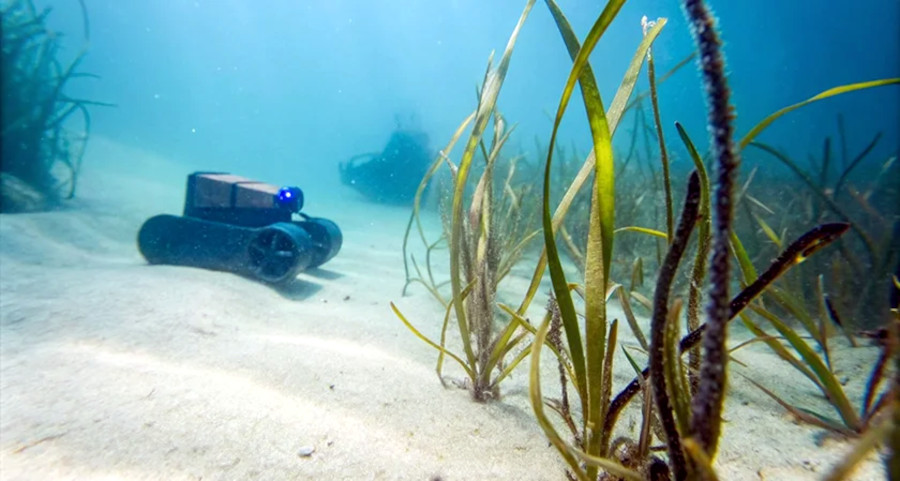 Image credit: The Silicon
Review
Image credit: The Silicon
Review
San Francisco-based Ulysses Ecosystem
Engineering is using autonomous marine drones to
transform how we restore seagrass meadows — one of the ocean’s most vital, yet
vanishing, habitats.
Seagrass covers only a small share of the seabed but punches far above its
weight. It stores 10 percent of oceanic
carbon
and captures it up to 35 times faster than rainforests — yet, over 7 percent of
these meadows disappear each year. Traditional restoration is too slow and
expensive to keep up. Ulysses offers a faster, cheaper, scalable fix.
How does it work?
The drones automate every step of seagrass restoration — harvesting seeds from
healthy beds, planting them in degraded zones and monitoring regrowth
autonomously. Freed from human limitations such as dive times and bad weather,
the drones work around the clock and cut costs by 90 percent.
Early
trials
with the University of Western Australia show
improved germination and growth versus manual methods. Built for scale, the
drones are modular, mass-manufacturable and powered by efficient battery systems
— making them ideal for global deployment.
Why should climate-conscious companies care?
Seagrass plays a major role in climate mitigation, marine biodiversity health
and coastal defense — yet is disappearing faster than coral reefs. Ulysses is a
rare example of marine tech that matches the scale of the problem. Its approach
makes blue carbon restoration not only feasible, but investable. For businesses,
this is a signal that the tools to regenerate marine ecosystems at industrial
scale are arriving. Whether for carbon
markets,
biodiversity
goals or
climate-resilient sourcing, this tech has plenty of strategic relevance.
Blockchain verifying impacts of ocean plastic cleanups
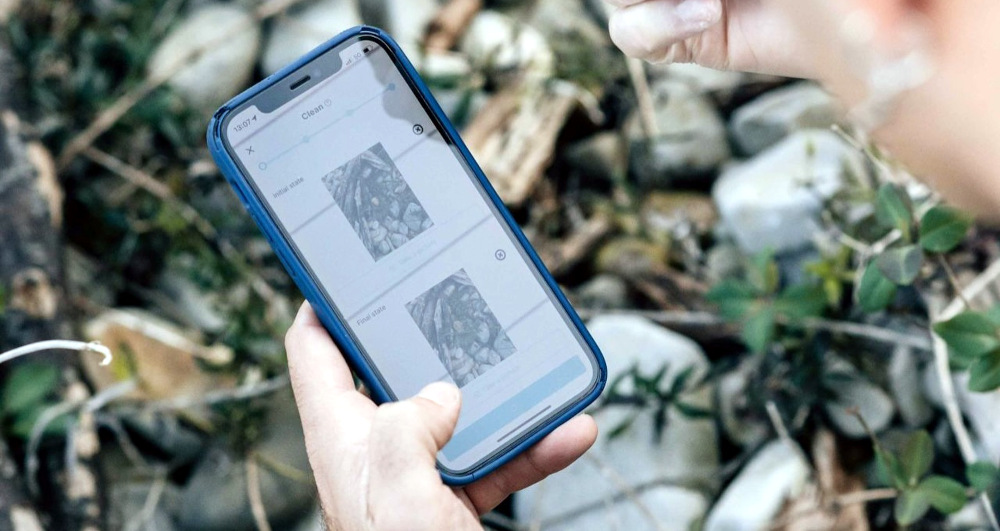 Image credit: Universal
Plastic
Image credit: Universal
Plastic
Universal Plastic is a Barcelona-based
tech-for-good startup tackling ocean plastic pollution while helping companies
hit their ESG goals. At the heart of its model is Become
Blue — a
verification platform that lets organizations fund ocean cleanups and receive verified, blockchain-notarized data in return. Basically, it’s
CSR with receipts.
How does it work?
Local waste collectors use the Universal Plastic app to log marine
plastic
they recover from beaches. This data — detailing type, volume and location — is
recorded and verified using AI and blockchain, ensuring accuracy and preventing
double-counting or fraud.
The companies that sponsor these efforts receive proof of impact that aligns
with the EU’s Corporate Sustainability Reporting Directive
(CSRD)
and other frameworks. Importantly, the model compensates the collectors directly
— making it a grassroots-positive system as well as a corporate-friendly one. No
need for brands to deploy teams on the ground — the system is plug-and-play and
built for scale.
Why should climate-conscious companies care?
This is where smart technology meets regenerative
economics.
With 11 million metric tonnes of plastic entering oceans each year, cleanup
efforts are essential — but funding, verification and accountability have always
been bottlenecks; Universal Plastic breaks through those. For brands, the
platform delivers environmental credibility — but also measurable, auditable
impact tied directly to global goals including the SDGs. It’s an elegant,
future-facing model: restoration not as charity, but as investment. And it’s a
noteworthy option for brands wanting to show, not just tell, their commitment to
ocean health.
Remote sensing maps coral health in game-changing detail
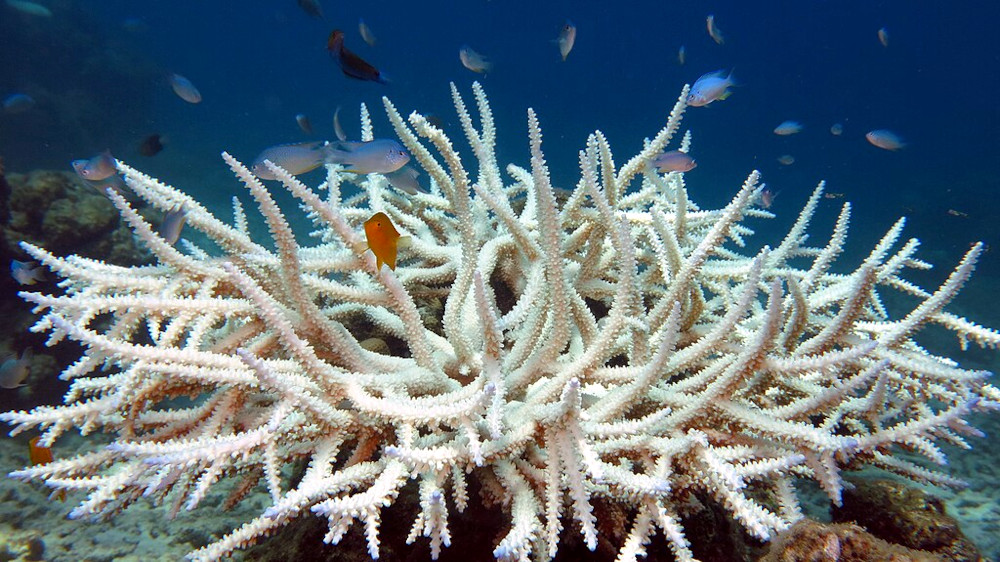 Image credit:
Wikimedia
Image credit:
Wikimedia
A new, satellite-based
tool
developed by King Abdullah University for Science and Technology and General Organization for the
Conservation of Coral Reefs and Turtles is
changing how we monitor coral reef health.
Built to track bleaching events in real time, the system analyzes how light is
reflected from the ocean floor to differentiate between healthy and bleached
coral. Unlike past approaches, it doesn’t just detect damage — it predicts the
severity of bleaching, helping conservationists act faster and smarter.
How does it work?
When coral is stressed by rising
temperatures
or pollution, it loses the algae that give it color and nutrients — which
changes how the coral reflects light. The tool’s algorithm processes satellite
ocean color data, filtering out atmospheric interference such as dust and
improving resolution to ten meters. This level of detail allows for accurate
mapping of bleaching severity across complex reef systems. In the future, the
team plans to integrate hyperspectral data for even greater accuracy and to
expand the system to reefs globally.
Why should climate-conscious companies care?
Coral reefs are ecological and economic lifelines — home to 25 percent of marine
species and a protective buffer for over a billion people — yet, they’re
vanishing under climate
stress.
For forward-thinking companies, this tool is more than a conservation
breakthrough: It’s a blueprint for scalable, tech-driven environmental
monitoring — offering actionable data that supports resilience in sectors
including
seafood,
tourism
and consumer products. Brands committed to nature-positive
strategies
should watch this space closely: It’s proof that innovation can be both precise
and planetary.
Upcycling seafood waste into high-value ingredients
 Image credit:
topntp26
Image credit:
topntp26
AquaFood is a Swedish startup using patented
technology to turn fish-processing byproducts — what the industry calls ‘marine
side streams’ — into premium food ingredients. With up to 70 percent of
aquatic foods — including fish and
seaweed
— discarded during processing, the firm’s mission is simple: Make more food with
less fish.
How does it work?
The company’s technology, developed at Chalmers University of
Technology, transforms leftover fish material into
several versatile products:
- a boneless, chicken-like fish mince with customizable fat, protein and
moisture levels — designed for use in a range of B2B food applications
- cold-pressed fish oil for supplements or
industrial use
- and fine collagen powder for nutraceuticals and cosmetics.
All products are created at low temperatures, which preserves nutrient quality and
slashes energy use — cutting both environmental and economic costs.
Why should climate-conscious companies care?
With nearly 38 percent of global fish stocks overfished and the seafood industry
wasting more than it
uses,
AquaFood’s circular model closes the loop on aquatic food production, reduces
pressure on ecosystems and turns would-be waste into revenue-generating,
sustainable goods. This kind of upstream innovation delivers real efficiency
gains; helps companies meet zero-waste and net-positive goals; and offers
customizable ingredients for next-gen food, wellness and beauty products.
Get the latest insights, trends, and innovations to help position yourself at the forefront of sustainable business leadership—delivered straight to your inbox.
Tom is founder of storytelling strategy firm Narrative Matters — which helps organizations develop content that truly engages audiences around issues of global social, environmental and economic importance. He also provides strategic editorial insight and support to help organisations – from large corporates, to NGOs – build content strategies that focus on editorial that is accessible, shareable, intelligent and conversation-driving.
Published Jul 7, 2025 8am EDT / 5am PDT / 1pm BST / 2pm CEST